Home » Divorce and Family law Blog » How Do I Know If My Divorce is Final in California (2026)


Dina Haddad and her team are here to help you find calm, fair solutions. Call us or book your consult today.
Divorce can feel like it’s taking forever, and sometimes, you just want to know when it’s finally over. Well, the answer is complex because not all the divorce timelines are the same in California.
But here is a way to check it out for; once your waiting period is over, check for Notice of Entry with FL-190 submitted in hard copy through first class physical mail via United States Postal Service (USPS) or electronically through court’s EFSP (electronic filing service provider) system.
The latter is subject to your consent to electronic filings and or the judgment packed is also submitted electronically. But one important point is that this document would not be self-representing and attorneys directly via email.
You can also check for a Judge signed Final Judgment (FL-180) entered with a court clerk. You can visit a courthouse for this purpose or check the case status online as some counties court allow checking the case status online.
For more information on divorce finalization, you can book a free consultation with our divorce mediation lawyers. We would be more than happy to assist you.
This blog discusses divorce finalization in detail from waiting period to how to check divorce records online.
You can finish the paperwork for your divorce as soon as you are able, but your marital status will not dissolve for at least 6 months and one day from when the petition is filed and served or the responses filed, whichever is.

This basically means you have a divorce judgment but are still legally married.
If your case is completed under the 6-month period, your marital status will dissolve on a future date. You will not need to do anything for your marital status to dissolve.
It will be automatic based on which you provide the court on the appropriate forms, the FL-180 and the FL-190. Let’s break this down further.
Is divorce without splitting assets possible in California? Check out the blog as it details 7 tips for Californian couples looking to divorce without splitting assets.
After filing the petition and serving it on your spouse, the waiting period as per the California legislature Family Code Section 2339 starts.
This is required by California law where the parties’ marital status cannot be finalised until at least six months and one day have passed.
Note that this phase begins after you and the other party submit a joint petition (available in 2026 and after), serve the Petition, or file a response, whichever is first. It’s not after the judge signs the final judgement.
What’s the use of the six months divorce waiting period? It’s to give couples time to reconsider their decision and also sort other things through like child support, custody and division of assets.
When you have reached all your agreements, you submit your divorce judgment to the court.
One sign that the divorce is coming to an end is when the judge signs on the final judgement (Form FL-180). But note that this isn’t the end, but a step to the end.
The document still needs to be filed with the court clerk or else your divorce won’t be officially recorded. On the FL-180, both in the caption and on the form, you will insert the date in which your marital status will dissolve.
If your divorce is uncontested, it can take four to six months to get to the judge’s signature. But if it is contested, it can take over a year before a judge signs. At Families First Mediation, we have a unique process to help couples speed up this process
After the judge signs the decree and has been filed with the court clerk, you will receive a Notice of Entry of Judgment (Form FL-190).
This document is primarily for the court and is part of the legal documents for your case. But it is an important document as it recognizes that divorce is finalized.
You obtain this document by physical mail first class. As per California’s rules of court Rule 5.413, the court clerk to notify notice of judgment using FL-190 to the attorney for each party or to the parties directly if they are self-represented or used private mediation.
Actually the two following common methods are used for submitting the notice of entry of judgement to parties or attorneys of the parties once the judgment packet is submitted to clerk in-person or either through the court’s e-filing system known as ESPS (electronic filing service provider)
The court never sends FL-190 (along with copies and stamped documents) directly via email.
If you opted for electronic filings in other words your case was implemented through e-filings, the court can electronically serve FL-190 through EFSP rather than physical mail with the same legal effect as the service by mail.
If you are self-litigant you will get ESFP notification and if you are represented by counsel, then your lawyer will get notification.
Not all courts accept e-filing as we’ve already discussed this ahead. In that case you will get the physical first class mail, postage prepaid, in a sealed envelope through USPS — something known as default delivery method — at the address the party/parties submitted on pre-stamped, pre-addressed envelopes with a judgment packet to the court.
Many county courts even with robust e-filing systems require FL-190, its copies and stamped envelope to be submitted in hard copy even if you opted for e-filing. Placer county is the best example of it.
Date of termination is an important concept as this date is printed in the box on FL-190 that says “Effective date of termination of marital or domestic partnership status.” After this date, you are literally divorced and thus can remarry or enter into the new partnership but you can’t remarry or enter into domestic partnership prior to it.
The earliest date of termination can be right after the cooling off period is passed, i.e., six months and one day after the respondent was served with the petition. This cooling off-period cannot be waived off even if you resolve the divorce issues through mediation or uncontested divorce and the judge signs the judgment in three months. Then, the termination date will be set after the cooling off period has passed.
In California, divorce records are not statewide, but they are managed locally by the Superior Court of California in each county. So, to check whether your divorce has been finalized or not, begin by finding your county court where you filed the case (using FL-100 or FL-700).
To find your county court, fill in the right details, such as the city’s name or zip code. Many county court websites allow you to check divorce status online, while many do not. We’ll discuss both, one by one (i.e., those that allow it and those that don’t).
Try to find the Judgment form (FL-180) and the Notice of Entry of Judgment (FL-190). The actual signed forms/documents are often locked down and cannot be fetched online if the case has been sealed from public access or marked confidential. Your divorce cannot be finalized before the mandatory period is over — six months and one day after the case was opened.
The following are the examples of counties that allow and do not allow checking divorce status or case index online.
|
County
|
Case Status Checking
|
||||
|---|---|---|---|---|---|
|
Los Angeles
|
Yes
|
||||
|
Orange County
|
Yes
|
||||
|
San Diego County
|
Yes
|
||||
|
Santa Clara County
|
Yes
|
||||
|
Sacramento County
|
Yes
|
||||
|
Alpine County
|
No
|
||||
|
Modoc County
|
No
|
||||
|
Sierra County
|
No
|
For many rural or least populated counties in California, you may not have an online portal for divorce records/case records. The following, then, are the ways to check records:

The Divorce Decree is a legal document that finalizes the dissolution of marriage. In other words, it’s the final judgment from a judge that completely dissolves your marriage or domestic partnership. The document typically includes details such as:
It will also cover the terms of the divorce such as child custody, visitation rights, property division, child and spousal support, and other relevant orders made by the court. This decree is typically issued after you have gone through the necessary legal process. You can also get it online through the LA Family Law Records or any California courthouse kiosk.
If your divorce is contested, the decree might get delayed for over a year.
The divorce judgment is your final paperwork that contains your agreement or court orders regarding your divorce.
This will include any orders or agreements for spousal support, child support, custody, and asset and debt division related to your case.
You may need to order a certified copy , which you can use to change your last name or needed for some retirement transfers (in rare situations).
Note that you can request to modify the orders for child support, spousal payment, and child custody.
But for this to go through, both parties need to agree on these modifications or get a new court order.
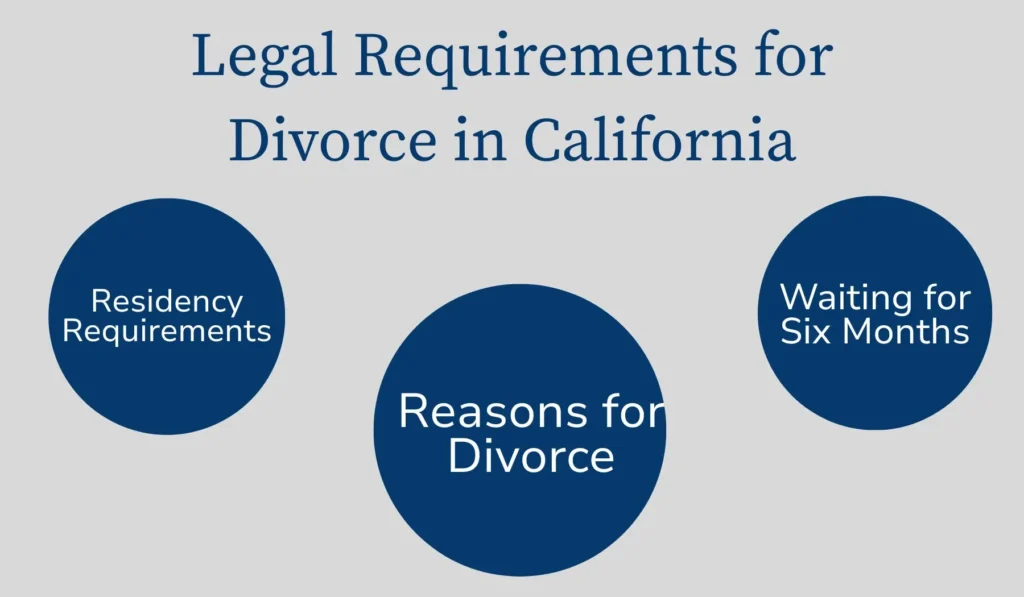
So what do you need to successfully file for a petition for dissolution in California? There are three main things:
Have you ever heard of automatic divorce in California? This blogpost talks about automatic divorce and long separation. Keep in mind that divorces aren’t always smooth. Issues like disputes over child custody and division of assets can make the process take over a year. Fortunately, you can avoid these issues or resolve them faster using Dina’s mediation services.

Dina Haddad is the founder of Families First Mediation, a firm born to help couples navigate the divorce process through compassionate mediation.
With over two decades of experience in Family Law, Dina excels at facilitating fair agreements and reducing the stress and cost of the divorce process.
At the same time, Dina is also great at managing high-conflict and high-asset cases, ensuring that both parties reach a fair resolution.
If you need help navigating the complexities of divorce, schedule a FREE Divorce Finalization Consultation call with Dina. Let’s talk about how we can help!
In the end, the best way to know if your divorce is final is when you see the signs.
These include when the judge signs the judgement form, you receive an entry of judgement, and then receive your date of termination.
Also note that you can check your divorce status with the LA Family Law court records, which are available online.
However, these complex processes can make your already stressful situation overwhelming. Make it easier by contacting Dina Haddad today!
Related: How to Avoid Alimony in California?
You will receive a Notice of Entry of Judgment (Form FL-190), which means that the law recognizes your divorce. The official date that your marital status dissolved or is dissolving will be in the middle of that form.
At the last phase, the court will require you to submit some forms, such as court orders, agreements, and any other legal issue.
Once they have been reviewed and nothing is missing, the judge will sign the judgement form. We often refer to this as the divorce judgment packet.
California has a mandatory “cooling off” period between divorce and remarriage. This is six months per the California legislature Family Code Sec 2339.
Once the waiting period has passed you can remarry as soon as you want.